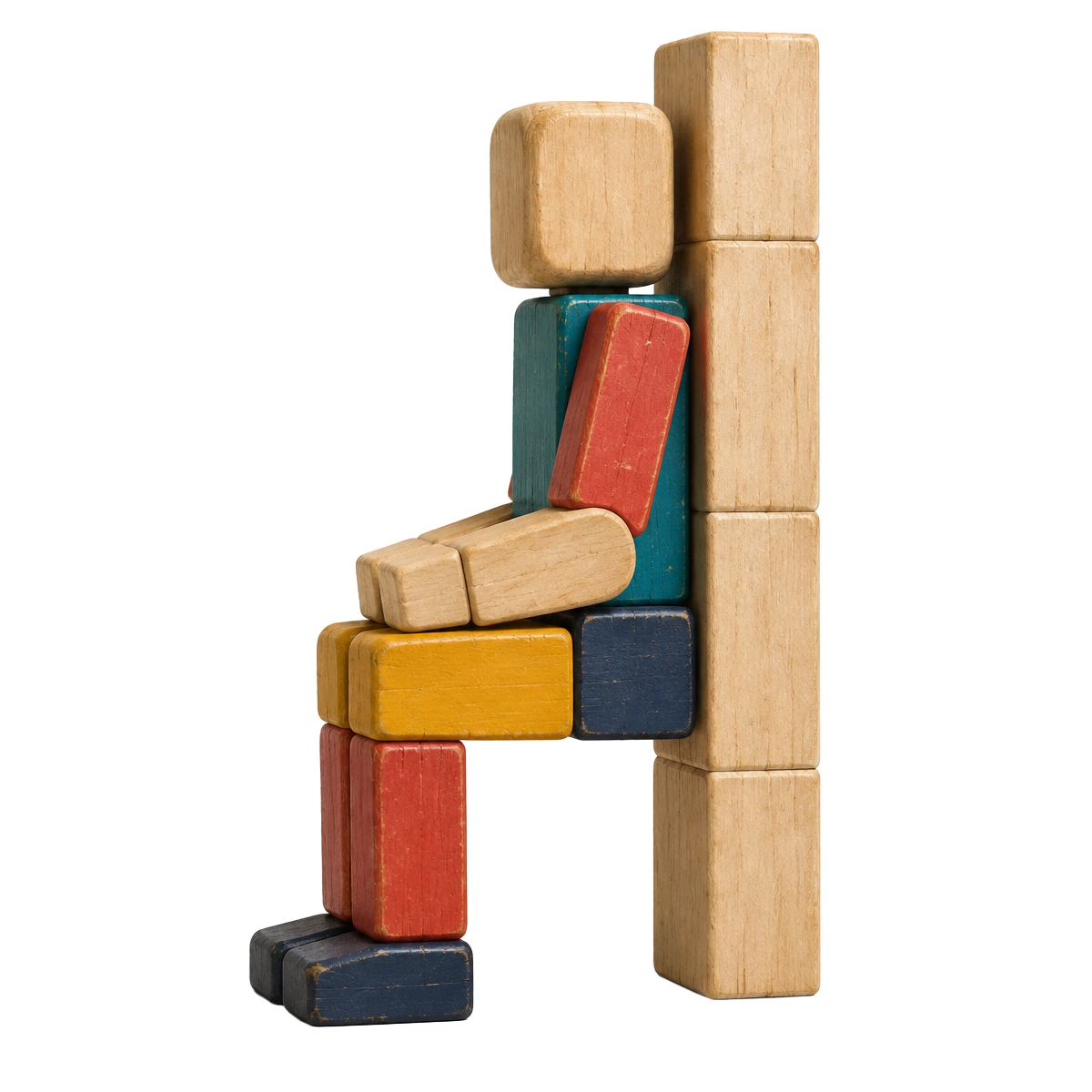
Sitria is built around one of the most studied — and most surprising — findings in recent exercise science: holding still against a wall may be the single most effective exercise for resting blood pressure.
The big review: 270 trials, one winner.
In 2023, researchers at Canterbury Christ Church University published a systematic review and network meta-analysis in the British Journal of Sports Medicine. They pooled 270 randomised controlled trials with 15,827 participants, comparing every major kind of exercise: cardio, dynamic resistance, combined training, high-intensity intervals, and isometric exercise.
Every type of exercise lowered resting blood pressure. But isometric exercise — holds like the wall sit — came out on top for both systolic and diastolic pressure, ahead of the cardio exercise that guidelines have traditionally recommended first. The authors suggested it may be time to update those guidelines.
A separate line of research from the same group found that the wall sit's intensity can be tuned precisely by knee angle: the deeper the bend, the higher the demand — which is exactly how Sitria scales your Wake Hold over time.
Honest caveats. Most of the included trials were small and supervised, results vary from person to person, and isometric exercise is one part of a heart-healthy life — not a replacement for medication, movement, or your doctor's advice.
270 trials reviewed15,827 participants#1 for resting BP
Sources
Edwards JJ, et al. “Exercise training and resting blood pressure: a large-scale pairwise and network meta-analysis of randomised controlled trials.” British Journal of Sports Medicine, 2023;57:1317–1326. bjsm.bmj.com
Wiles JD, et al. “An alternative approach to isometric exercise training prescription for cardiovascular health.” Translational Journal of the ACSM, 2018 — knee-angle-based wall squat prescription.
Mayo Clinic Health System. “Isometric exercise and blood pressure,” 2024 — breathing and safety guidance. mayoclinichealthsystem.org
Cleveland Clinic. “9 Benefits of Wall Sits (and How To Do Them),” 2025 — form and progression. health.clevelandclinic.org
From the clinic
What doctors are saying about it.
Commentary from clinicians alongside the studies behind it. Independent voices, not endorsements of Sitria.
Good form matters more than depth. A shallow, well-aligned hold beats a deep, strained one.
01
Set your stance
Stand with your back flat against a sturdy wall. Walk your feet out about two foot-lengths, hip- to shoulder-width apart, toes pointing forward.
02
Slide down to your angle
Bend your knees and let your back slide down the wall. Beginners stop around 120–135° at the knee; a full wall sit is roughly 90°, like sitting in an invisible chair.
03
Stack your joints
Knees track over your ankles, never past your toes and never caving inward. Keep your whole back, shoulders, and head in contact with the wall.
04
Breathe — never hold your breath
Breathe slowly and steadily the whole time. Straining while holding your breath (a Valsalva) can spike blood pressure, which is the opposite of the goal.
05
Stand up slowly
When the hold ends, push through your feet and rise slowly. Pause before walking away — blood pressure shifts quickly after an isometric hold.
Difficulty levels
Start shallow. Sink deeper over weeks.
In the research, intensity is set by knee angle — not by adding weight. Sitria follows the same idea, nudging your Wake Hold deeper and longer as your streak grows.
Level 1 · Getting started
Angle
120–135° knee bend
Session
4 holds × 30–45 seconds
Recovery
Rest 1–2 minutes between holds
A shallow bend keeps effort modest while you learn the position. Most research protocols start here — a shallower angle means a lighter load on the legs and heart.
Level 2 · Building the habit
Angle
100–120° knee bend
Session
4 holds × 1 minute
Recovery
Rest 1–2 minutes between holds
As the position feels familiar, sink a little lower and extend each hold. The deeper the knee bend, the harder the muscles work — angle is the wall sit's volume knob.
Level 3 · The studied dose
Angle
~90° knee bend
Session
4 holds × 2 minutes
Recovery
Rest 2 minutes between holds
This is the structure used in many isometric training trials: four two-minute wall sits, three times a week — about 14 minutes of holding per week in total.
A common weekly structure in the studies is three sessions per week, with at least one rest day between them. At Level 3 that's roughly 14 minutes of holding per week — one of the most time-efficient exercise prescriptions ever studied.
Who should check with a doctor first.
Isometric holds briefly raise blood pressure while you're doing them — that's normal and part of how they work. But if you have high or uncontrolled blood pressure, heart disease, are pregnant, or have been told to avoid straining exercise, talk to your doctor before starting. Stop immediately if you feel dizzy, chest pain, or unusual shortness of breath.
Sitria is a wellness app, not medical treatment. It does not diagnose, treat, or prevent any condition. Keep taking medication as prescribed, and use the doctor report to share your log with a professional.